


- 22/10/2026
- Valmet Energy
Pyrolyzer Solution from Valmet: Converting plastic waste into pyrolysis oil
Plastic Waste: From an Environmental Burden to a Circular Economy Resource
Plastic is a material widely used in daily life. However, its overconsumption is generating a massive amount of waste globally. Managing plastic waste has long been a major challenge for policymakers and scientists, as plastic is highly durable, extremely difficult to fully decompose, and can persist in the environment for hundreds of years.
However, despite its negative impacts, plastic is still considered a valuable resource if properly collected, sorted, and processed. Instead of becoming an environmental burden, plastic waste can be recycled and reused, contributing to the promotion of a circular economy and sustainable development on a global scale. Recycling not only reduces reliance on fossil fuel resources but also significantly cuts carbon emissions.
Traditionally, plastic is recycled mechanically. This method effectively processes plastics used in products such as plastic bags, buckets, and gardening tools. However, mechanical recycling fails to meet strict quality requirements for specialized applications like food packaging. Outstandingly, chemical recycling technology significantly expands the application potential of recycled plastics.
Mechanical Recycling
Plastic bags
Lower quality output
Limited food-contact use
Chemical Recycling
Mixed plastic waste
Virgin-quality output
Suitable for demanding applications
Pyrolysis Technology: A Breakthrough in Chemical Recycling
Valmet has introduced a new plastic chemical recycling technology based on fast pyrolysis. Pyrolysis is a thermochemical conversion process in which feedstocks such as mixed plastic waste are decomposed into gases, liquids, and solid residues in the absence of oxygen. The liquid fraction, known as pyrolysis oil, can be further upgraded for use in downstream petrochemical processes, where it serves as a feedstock for producing virgin-quality plastics. These recycled plastics are suitable for demanding applications, including contact-sensitive and other quality-critical uses.
Valmet has a long history in pyrolysis technology development, and extending the technology’s use to chemical recycling supports Valmet’s goal of transforming industries for a regenerative tomorrow.

Valmet’s pyrolysis technology journey began in the 2000s with foundational research. In 2011, the company officially completed its first pilot facility to conduct tests on the pyrolysis system. A major breakthrough occurred in 2013 with the establishment of the Catalytic Pyrolysis Consortium, alongside the commercial startup of a 50,000 tonnes-per-year fast pyrolysis plant in Joensuu.
Valmet’s technology can be scaled to large industrial capacities above 100 kt/a in a single unit, thanks to the excellent heat transfer inherent in fluid bed systems. This scalability reduces both capital and operating costs, enabling economically viable industrial-scale chemical recycling.
Valmet operates an innovative in-house testing facility and pilot plant in Tampere, Finland. At the heart of this R&D Center is the world’s largest catalytic bio pyrolysis pilot plant, commissioned in 2023. Valmet is currently expanding its facility with a new industrial-scale pyrolysis plant, offering infrastructure that bridges the gap between lab-scale trials and commercial deployment of plastic recycling—supporting customers’ investment decisions with real-life data. The new industrial-scale pyrolysis plant is scheduled to be ready in 2027.
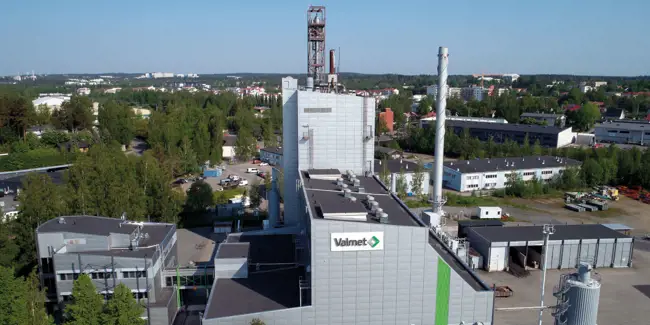
Image: Valmet
With scalable technology, real‑world testing capabilities, and comprehensive lifecycle support, Valmet is ready to help its customers turn today’s plastic waste challenges into tomorrow’s competitive advantage. Valmet Pyrolyzer brings chemical recycling within reach, enabling companies to meet stricter regulatory demands while building a more circular and sustainable business.
Learn more about the Valmet Pyrolyzer system in the video below.
Source: YouTube, video “Valmet Pyrolyzer: Revolutionizing Plastic Recycling with Pyrolysis”

