


- 13/11/2026
- TANA Oy
Maximizing Landfill Capacity Through Smart TANA Solutions
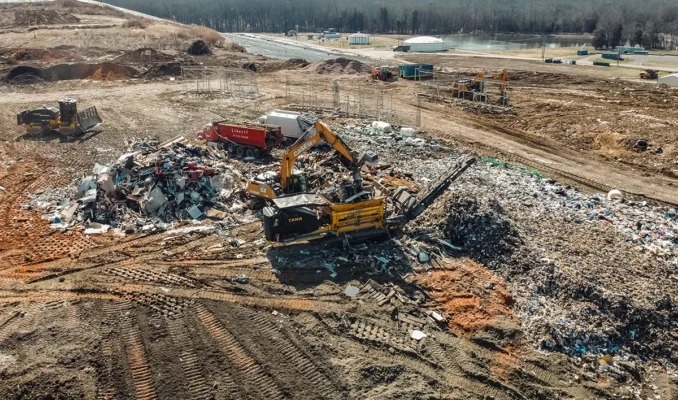
Image: TANA Oy
For modern landfill operators, operational efficiency means maximizing every remaining cubic meter of airspace. At the Salem County Improvement Authority (SCIA)—which plays a pivotal role in solid waste management and sustainable infrastructure development in Salem County, New Jersey—Landfill Manager Parker Smith defines this mindset as “smart landfilling”: continuously refining waste handling processes, enhancing compaction performance, and maximizing the operational lifespan of the landfill.
“For us, it’s all about airspace, we are only permitted to fill a certain volume. Therefore, how much waste we can fit into that space is critical to us.” says Parker Smith, Landfill Manager, Salem Country Improvement Authority
Overview of the Salem County Landfill, New Jersey
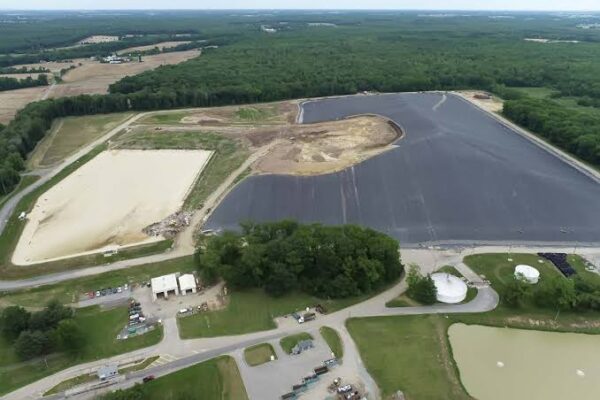
Aerial view of the Salem County Solid Waste Landfill in New Jersey, operated by the Salem County Improvement Authority (SCIA)
In Salem County, where 400 to 500 tons of municipal solid waste (MSW) and construction and demolition (C&D) debris are received and processed daily, maximizing the permitted airspace of the landfill is always a top priority.
Due to New Jersey’s unique geological conditions and stringent environmental protection standards enforced by the New Jersey Department of Environmental Protection (NJDEP), expanding the footprint or securing permits to construct new landfill cells requires substantial capital investment in infrastructure alongside a multi-year regulatory approval process. Consequently, the critical imperative for the management team is to maximize waste compaction density within the existing operational footprint.
The Turning Point Behind the Decision to Upgrade
This focus led the team to rethink how material was being processed before placement. Rather than relying on compaction alone, Salem County began combining shredding and compaction to better break down incoming waste. By reducing bulky material before it reaches the working face, the facility is able to create denser layers and make better use of available airspace.
The difference isn’t just something management sees in reports, operators notice it in day-to-day operations. To support that approach, Salem County turned to TANA equipment after visiting other facilities, demoing machines, and evaluating performance in real world environments.
The benefits of equipment from one manufacturer
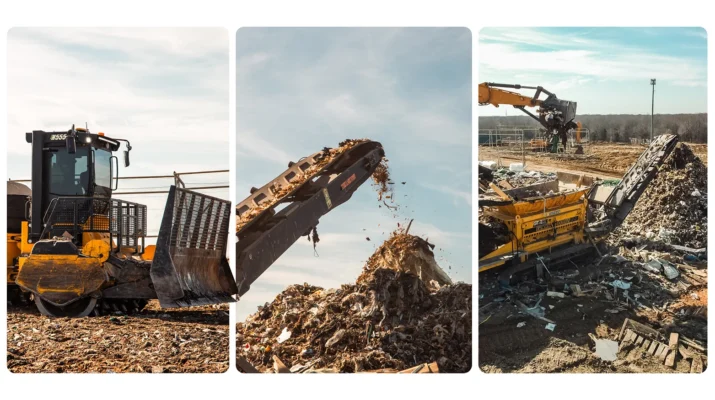
Image: TANA Oy
Beyond performance, Smith says one of the biggest advantages came from using a shredder and landfill compactor from the same manufacturer.
Shared systems and service parts simplified maintenance and helped reduce complexity for the operations team.
“Having the shredder from the same manufacturer, utilizing the same filters and the same everything we were already stocking on site, it was really a win-win” Smith says.
For Salem County Improvement Authority, smart landfilling isn’t a buzzword, it’s a practical approach to getting more value from every load that enters the site. By pairing shredding with compaction and investing in equipment built specifically for waste operations, the facility is working to maximize airspace, reduce inefficiencies, and extend the lifespan of the landfill.
As a result, waste is processed more efficiently, operating costs are optimized, and the landfill’s service life is significantly extended.
Watch the video below to see how the specialized design and operating principles of TANA landfill compactors and shredders deliver the exact results Salem County relies on—maximizing waste compaction density and unlocking valuable landfill airspace.
Source: TANA Oy Youtube


