- 09/07/2026
- Blogs
Does long-term use of E10 gasoline reduce engine performance?
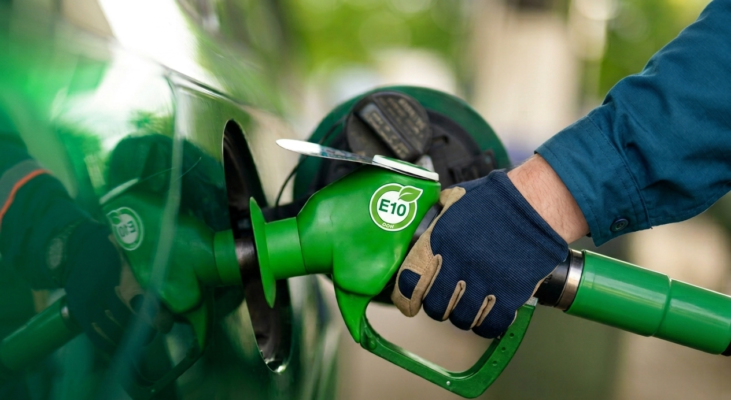
1. Differentiating Between E10 and RON 95 Gasoline
Driven by the global shift toward biofuels, E10 gasoline is steadily gaining popularity. However, in Vietnam, this type of fuel remains relatively new to many consumers.
a. Definitions of E10 & RON 95 Gasoline
Essentially, E10 stands for “Ethanol 10%,” representing a fuel blend comprised of 90% conventional gasoline and 10% ethanol. Ethanol is a bio-alcohol derived from agricultural feedstocks such as sugarcane, cassava, and corn. It is recognized as a renewable energy source that plays a vital role in sustainable development, particularly within the combustible fuel sector, a critical component of modern life.
In contrast, RON 95 – the conventional petroleum-based gasoline familiar to consumers contains little to no ethanol.
b. Differences Between E10 & RON 95 Gasoline
The primary distinction between E10 and RON 95 lies in their octane rating, which measures a fuel’s resistance to engine knocking. A higher octane rating ensures a more stable combustion process, thereby providing better engine protection.
Both RON 95 and E10 possess octane ratings above 90, classifying them as premium, high quality fuels that meet safety standards. However, thanks to its ethanol content, E10 offers an additional advantage in reducing the risk of pre-ignition. This stems from a combination of a high octane rating and the charge-cooling effect produced as the ethanol evaporates.
Conversely, RON 95 achieves its high octane rating through petroleum refining processes and the blending of knock-resistant hydrocarbon compounds. Nevertheless, under certain operating conditions such as heavy loads or in turbocharged engines E10 can deliver superior anti-knock efficiency due to ethanol’s inherent cooling properties.
2. Why is E10 Gasoline Considered a Renewable Energy?
a. Origin from Biological Raw Materials
According to Assoc. Prof. Dr. Pham Huu Tuyen, the main difference between E10 and regular gasoline is where they come from. While regular gas relies entirely on crude oil – a limited resource that will eventually run out E10 is partly made from plant-based ethanol. This ethanol is extracted from crops like cassava, corn, and sugarcane. Because these crops can be replanted and grown continuously, E10 helps countries secure their own energy supply and depend less on foreign oil.
b. Delivering Practical Value to Agriculture and Human Life
Furthermore, using crops to make ethanol boosts farming, creates new markets for agricultural products, and supports local economies. This makes E10 a homegrown energy source that perfectly fits the goals of sustainable development and a circular economy.
In fact, developed regions like the US and Europe have used E10 for decades, proving it is safe, stable, and eco-friendly. For example, E10 has been a standard fuel in the US for over 20 years, and the EU actively promotes biofuels to cut greenhouse gases.
This widespread use proves that E10 is more than just a backup for regular gasoline, it is a reliable, renewable energy source driving the global shift toward clean energy.
3. Does E10 Gasoline Reduce Fuel Economy and Vehicle Performance?
In reality, E10 does not significantly increase fuel consumption. According to the U.S. Environmental Protection Agency (EPA), vehicles running on E10 experience only a slight 1%–3% reduction in fuel economy compared with conventional gasoline. Research from the U.S. National Renewable Energy Laboratory (NREL) also indicates that this difference is generally difficult to detect in everyday use, as actual fuel consumption is influenced more by factors such as traffic conditions, vehicle load, and driving habits.
Because the difference in consumption between the two fuel types is insignificant, drivers will rarely perceive any distinction during daily operation.
One common concern among drivers is whether E10 gasoline can reduce engine performance. According to Assoc. Prof. Dr. Dam Hoang Phuc, Director of the Automotive Engineering Training Program at Hanoi University of Science and Technology, this concern mainly stems from the properties of ethanol in E10 fuel. Because ethanol has a lower energy content than conventional gasoline, engine output may theoretically decrease slightly. However, thanks to its high octane rating, E10 supports a stable and efficient combustion process, meaning that any difference in performance is generally negligible under normal driving conditions.
In addition, ethanol has solvent properties but does not damage the metal components of modern engines. As a result, concerns that E10 gasoline may cause engine corrosion are unfounded when the fuel is used under normal operating conditions.
One important warning is that E10 gasoline should not be left unused in the fuel tank for extended periods, particularly in rarely driven vehicles. Over time, the fuel can suffer from phase separation or form sticky residues. This can potentially lead to starting difficulties, reduced engine power, or clogged fuel injectors.
4. E10 Fuel: Why the World Uses It
Overall, transitioning to E10 is a safe and logical step toward reducing emissions and adopting sustainable energy. The reliability of this fuel is backed by years of successful use in numerous developed nations. A prime example is the U.S., one of the world’s largest E10 markets. Similarly, Brazil has successfully integrated even higher bioethanol blends, such as E27 and E100, as standard fuel for flexible-fuel vehicles.